
Glass Fiber Reinforced Concrete Applications in Modern Architecture
Glass Fiber Reinforced Concrete (GFRC) has emerged as a critical material in contemporary architecture, combining the durability of concrete with enhanced flexibility and reduced weight. Its unique composition allows for innovative design solutions while maintaining structural integrity, making it a preferred choice for architects, engineers, and construction professionals. GFRC is increasingly applied in façades, decorative cladding, and structural panels, enabling both aesthetic creativity and engineering performance. This article explores the role of GFRC in modern architecture, examining its technical principles, material properties, manufacturing process, quality factors, supply chain considerations, industry challenges, and future trends.
The global architecture and construction industries are experiencing growing demand for materials that balance strength, durability, and design versatility. Urbanization, high-rise development, and sustainable building practices are driving the need for lightweight and high-performance construction materials. Traditional concrete, while strong, is often limited by its weight, brittleness, and labor-intensive installation requirements.
GFRC addresses these limitations by offering lightweight, fiber-reinforced panels that can achieve large spans, intricate shapes, and diverse surface textures without compromising performance. The material is particularly in demand in commercial, residential, cultural, and institutional projects, where aesthetic quality and structural performance are equally important. Sustainability considerations further enhance GFRC adoption, as its long service life and low maintenance reduce lifecycle costs and environmental impact.
Glass Fiber Reinforced Concrete combines cementitious materials with alkali-resistant glass fibers, producing a composite material with improved tensile strength, ductility, and crack resistance. Unlike conventional concrete, which relies solely on compressive strength, GFRC distributes loads across fibers, allowing for thinner and lighter panels with comparable or superior performance.
Fiber Reinforcement: Glass fibers are uniformly dispersed within the concrete matrix, providing tensile support and preventing micro-cracks.
Reduced Thickness: GFRC panels can be manufactured as thin as 20–35 mm, decreasing dead load on building structures.
Customizable Textures: Panels can be molded to replicate stone, wood, or abstract textures, providing architects with significant creative freedom.
Enhanced Durability: The material demonstrates resistance to weathering, freeze-thaw cycles, and UV exposure.
These technical characteristics make GFRC an ideal solution for façades, decorative elements, and complex architectural features where conventional concrete or masonry would be impractical.
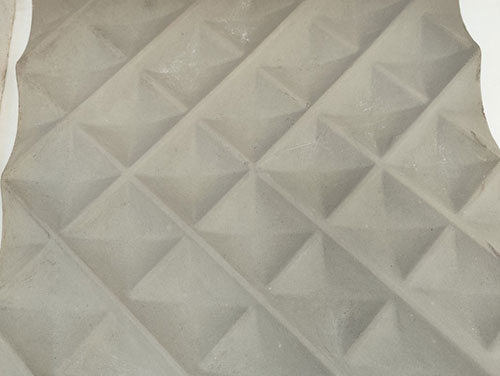
GFRC consists of several components, each contributing to its performance:
Cementitious Matrix: Portland cement or blended cements provide the base structure.
Fine Aggregates: Silica sand or quartz ensures uniformity and surface finish.
Glass Fibers: Alkali-resistant fibers enhance tensile strength and crack resistance.
Water and Admixtures: Optimized for workability, curing control, and surface quality.
Optional Pigments and Sealers: For color consistency, aesthetics, and environmental protection.
Mixing: High-shear mixers combine cement, sand, fibers, and water to achieve a homogeneous mixture.
Casting or Spraying: GFRC can be applied using spray-up or cast methods, depending on panel thickness and texture requirements.
Molding: Custom molds shape the panel surface and edges for desired aesthetic and functional outcomes.
Curing: Controlled humidity and temperature curing ensure dimensional stability and structural strength.
Finishing: Sandblasting, polishing, or surface treatments enhance texture and durability.
The precise control of each step ensures consistent panel quality and performance, particularly important in large-scale or high-end architectural projects.
The performance of GFRC panels depends on several critical factors:
Fiber Distribution and Orientation: Uneven dispersion can lead to weak points and reduced tensile capacity.
Water-to-Cement Ratio: Excess water reduces strength and durability, while insufficient water compromises workability.
Curing Conditions: Temperature and humidity control prevent shrinkage cracks and ensure dimensional stability.
Mold Accuracy: High-fidelity molds guarantee consistent texture, thickness, and edge precision.
Environmental Exposure: Coastal or industrial environments may require additional protective coatings to maintain long-term performance.
Strict quality control during manufacturing and installation ensures the longevity and reliability of GFRC panels.
Selecting an experienced supplier is crucial for project success. Key considerations include:
Proven track record with GFRC panels for architectural applications.
In-house laboratory testing for strength, durability, and fiber distribution.
Precision mold-making capabilities for customized designs.
Efficient logistics to deliver large-format panels safely.
Engineering support for anchoring, installation, and integration with building systems.
Reliable suppliers reduce risks associated with material defects, delivery delays, and installation errors, ensuring project schedules and budgets are maintained.
While GFRC offers many benefits, there are challenges that architects and builders should be aware of:
Cracking During Installation: Panels may develop micro-cracks if mishandled or improperly supported.
Surface Imperfections: Air voids or uneven fiber distribution can affect aesthetic quality.
Installation Complexity: Large-format panels require precise anchoring, alignment, and coordination with structural systems.
Higher Initial Costs: GFRC panels may be more expensive than conventional concrete, although lifecycle savings often offset upfront investment.
Addressing these challenges requires collaboration between designers, manufacturers, and installation teams, along with adherence to best practices and quality standards.
GFRC panels are employed in a variety of modern architectural projects:
Commercial Buildings: Office towers and retail centers use GFRC for lightweight façades and decorative cladding.
Residential Developments: High-rise apartments benefit from GFRC panels that offer aesthetic variety without adding structural load.
Cultural and Civic Facilities: Museums, theaters, and civic centers utilize GFRC for complex shapes and intricate surface designs.
Infrastructure Projects: Bridges, pedestrian walkways, and public installations use GFRC for durability and low maintenance.
Modular and Prefabricated Construction: Panels integrate seamlessly into prefabricated systems, accelerating construction timelines.
These applications demonstrate GFRC’s versatility and ability to meet both functional and aesthetic requirements in modern architecture.
The evolution of GFRC technology is shaped by several emerging trends:
Digital Fabrication: CNC molds and robotic casting enable highly intricate textures and large-format panels.
Sustainable Mix Designs: Incorporating recycled materials and supplementary cementitious components reduces environmental impact.
Hybrid Systems: GFRC is combined with insulation, metal frameworks, or other composites to improve thermal efficiency.
Performance Optimization: Ongoing research focuses on enhancing fire resistance, durability, and surface finish.
Prefabrication Expansion: As modular construction grows, GFRC panels support rapid assembly, design flexibility, and reduced construction waste.
These developments ensure GFRC remains a key material in sustainable, high-performance architecture.
1. How long do GFRC panels typically last?
With proper installation and maintenance, GFRC panels can last 50 years or more.
2. Are GFRC panels suitable for harsh climates?
Yes, GFRC demonstrates excellent resistance to freeze-thaw cycles, UV exposure, and coastal environments.
3. Can GFRC be molded into complex shapes?
Absolutely. GFRC can replicate stone, wood, geometric, or custom designs with high precision.
4. What maintenance is required?
Periodic inspection and cleaning, along with protective coatings in severe environments, help preserve aesthetics and durability.
5. How does GFRC compare to traditional concrete?
GFRC offers reduced weight, enhanced tensile strength, and greater design flexibility while maintaining comparable durability.
Glass Fiber Reinforced Concrete is revolutionizing modern architecture by delivering a material that combines strength, durability, and aesthetic versatility. From façades and decorative panels to modular construction, GFRC supports innovative design and sustainable building practices. As technology advances, digital fabrication, hybrid systems, and optimized mix designs will further enhance GFRC’s performance, ensuring its continued role in shaping high-performance, visually striking structures worldwide.
Этот веб-сайт использует файлы cookie, чтобы обеспечить вам максимально эффективное использование нашего веб-сайта.

 English
 Español
 Portugues
 Français
 Deutsch
 日本語
日本語 한국어
한국어 العربية
 Italiano
 Polski
 Türk dili
 Melayu
 中文
中文 қазақ
қазақ עִברִית
 українська
 norsk
norsk o'zbek
 ଓଡିଆ
ଓଡିଆ



 телефон
Комментарий
(0)